
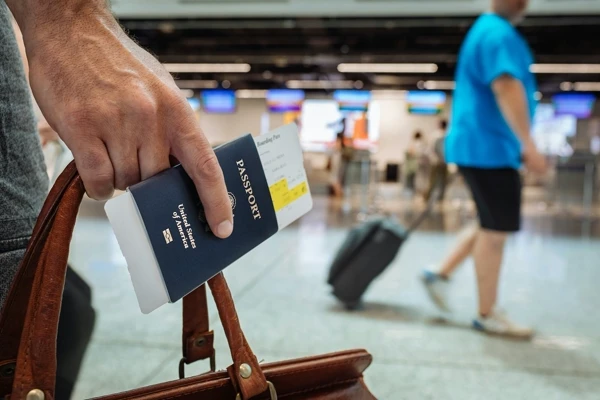
Photo by Rick Jamison on Unsplash
Publicado 31 Jul 2026
Citizenship by Investment Countries in 2026: What Investors Should Know
Compare countries offering citizenship by investment in 2026, including costs, timelines, passport access, and tax residency risks before you apply.

Citizenship by investment countries in 2026 looks very different from the market investors saw a few years ago. The cheapest Caribbean passport routes have become more expensive, EU citizenship-by-investment options have faced major legal pressure, and due diligence is stricter across most serious programs.
For investors, founders, internationally mobile families, and HNWIs, the real question is no longer simply “Which passport can I get?” It is “Which citizenship actually fits my travel, tax residency, family, and long-term compliance strategy?”
A second passport can improve mobility and create a backup plan. But it does not automatically change your tax residence, remove filing obligations, or protect you from cross-border reporting rules.
What Are Citizenship by Investment Countries?
Citizenship by investment countries are jurisdictions that allow eligible foreign applicants to apply for citizenship after making a qualifying financial contribution, investment, or purchase.
In practice, this usually means one of four routes:
◾ a non-refundable contribution to a government fund;
◾ investment in approved real estate;
◾ investment in government bonds or public projects;
◾ a larger business or economic contribution.
The important distinction is that citizenship by investment is not the same as a golden visa. A golden visa usually gives residency first. Citizenship by investment can lead directly to citizenship and a passport, although the exact process, timeline, and requirements vary by country.
This is also where many investors make their first mistake. A passport is an immigration status. Tax residency is a separate legal question. You can become a citizen of one country while remaining a tax resident somewhere else because of your home, family, work, day count, or source of income.
Best Citizenship by Investment Countries in 2026
There is no single “best passport to buy” in 2026. The right program depends on what the investor actually needs: speed, cost, visa-free travel, family inclusion, access to the United States, real estate exposure, or a future relocation plan.
Here is a practical overview of the main citizenship by investment countries investors still compare in 2026.
Dominica
◾ Typical minimum investment: from around $200,000
◾ Best for: lower-cost Caribbean citizenship by investment
◾ Key caution: passport strength and tax residency are separate
Antigua and Barbuda
◾ Typical minimum investment: from around $230,000
◾ Best for: families and Caribbean access
◾ Key caution: physical presence may be required after approval
Grenada
◾ Typical minimum investment: from around $235,000
◾ Best for: investors interested in US E-2 visa eligibility
◾ Key caution: higher total costs after fees
St Lucia
◾ Typical minimum investment: from around $240,000
◾ Best for: flexible investment options
◾ Key caution: due diligence and processing timelines matter
St Kitts and Nevis
◾ Typical minimum investment: from around $250,000
◾ Best for: established Caribbean program
◾ Key caution: no longer a low-cost $150,000 option
Vanuatu
◾ Typical minimum investment: from around $130,000
◾ Best for: speed and Pacific mobility
◾ Key caution: weaker access than many Caribbean passports
Turkey
◾ Typical minimum investment: from around $400,000 real estate
◾ Best for: real estate investors and regional mobility
◾ Key caution: property valuation and holding rules matter
Egypt
◾ Typical minimum investment: from around $250,000
◾ Best for: Middle East / Africa positioning
◾ Key caution: passport strength is more limited
These figures are starting points only. Government fees, due diligence fees, family members, legal costs, real estate costs, and agent fees can significantly change the total amount.
Caribbean Citizenship by Investment in 2026
The Caribbean remains the center of the citizenship by investment market in 2026. The main programs are: Antigua and Barbuda, Dominica, Grenada, St Kitts and Nevis, St Lucia.
These programs are popular because they usually offer relatively fast processing, no long physical residence requirement before citizenship, and broad visa-free or visa-on-arrival travel access.
But the old idea of a “cheap $100,000 Caribbean passport” is largely outdated. After regional changes, most serious Caribbean citizenship by investment programs now start around $200,000 or more before fees.
Cheapest Citizenship by Investment in 2026
For investors searching for the cheapest citizenship by investment in 2026, the answer depends on whether they mean cheapest globally, cheapest Caribbean program, or lowest total family cost.
In broad terms:
◾ Vanuatu may appear among the lower-cost and fastest routes.
◾ Dominica is often one of the lower-cost Caribbean options.
◾ Antigua and Barbuda can be competitive for families.
◾ Grenada, St Lucia, and St Kitts and Nevis usually cost more once fees and family members are included.
But “cheapest” is not always the best criterion.
A low headline contribution may come with weaker visa-free access, fewer relocation benefits, limited resale value, or a passport that does not support your actual travel pattern. A founder who frequently travels to the US, UK, EU, and Middle East may need a very different passport strategy from a retiree who simply wants backup citizenship.
A common mistake is comparing only the donation amount. In practice, the better comparison is total cost plus practical benefit.
Fastest Citizenship by Investment in 2026
Vanuatu is often described as one of the fastest citizenship by investment options, with some sources promoting timelines measured in weeks or a few months. Caribbean programs are usually slower, often taking several months depending on the country, application quality, due diligence, and family structure.
But speed should not be the only factor.
Fast processing does not automatically mean a stronger passport, better banking access, better tax planning, or better long-term security. A rushed application can also create problems if the investor has complex source-of-funds documentation, multiple residences, past business exits, or politically sensitive connections.
For HNWIs and founders, the safest approach is usually to treat citizenship by investment as part of a wider cross-border plan, not as a quick purchase.
Citizenship by Real Estate Investment Countries
Some citizenship by investment countries allow applicants to qualify through approved real estate instead of a donation.
Common real estate routes include:
◾ Turkey, where real estate is one of the best-known citizenship routes;
◾ Grenada, through approved real estate projects;
◾ Antigua and Barbuda, through approved real estate investment;
◾ Dominica, through approved real estate projects;
◾ St Kitts and Nevis, through qualifying real estate or public benefit projects.
Real estate can feel more attractive than a donation because the investor owns an asset. But it is not always cheaper or safer.
The property may need to be held for a minimum period. Resale may be restricted. Approved projects may have different liquidity risks than ordinary open-market real estate. Additional government fees can also make the total cost much higher than the headline investment amount.
For tax purposes, real estate ownership can create another layer of reporting. Rental income, capital gains, wealth tax exposure, local property taxes, and foreign asset reporting may still apply depending on where the investor is tax resident.
Is EU Citizenship by Investment Still Available in 2026?
Investors often ask how much they need to invest in the EU to get citizenship. In 2026, the answer is much more cautious than it used to be.
Malta was previously one of the most famous EU citizenship-by-investment routes. But after the 2025 EU Court of Justice ruling against Malta’s investor citizenship scheme, EU “golden passport” programs face far greater legal and political pressure.
This does not mean all European investment migration is gone. Some countries still offer residence-by-investment programs, often called golden visas. But residence and citizenship are different.
A golden visa may help you live in a country, build ties, and potentially qualify for citizenship later through ordinary naturalisation. It does not usually give you an immediate EU passport.
So for investors asking “Can I buy EU citizenship?” the practical answer in 2026 is: not in the simple way many older articles suggest.
Citizenship by Investment Asia: What Are the Options?
Searches for “citizenship by investment Asia” usually reflect interest in Turkey, Middle Eastern programs, or broader regional mobility.
Turkey is the best-known option in this category. Its citizenship by investment route is often connected to real estate purchases, with a common threshold around $400,000. Turkey can be attractive for investors who want property exposure, regional access, and a passport connected to a large economy.
Egypt and Jordan may also appear in citizenship by investment comparisons, although their passport strength and practical use cases are different from Caribbean programs.
The key point is that “Asia” is not one unified citizenship market. Programs differ significantly in investment amount, processing time, passport strength, local tax implications, and whether the country is useful for the investor’s actual travel and business life.
Why a Second Passport Does Not Automatically Change Tax Residency
Many investors assume that once they obtain a second passport, they can stop being tax resident in their original country. In practice, tax authorities rarely look only at citizenship.
Tax residency can depend on:
◾ how many days you spend in a country;
◾ where your home is available;
◾ where your spouse or children live;
◾ where you work or manage a business;
◾ where your income is sourced;
◾ whether you have a permanent home or center of vital interests;
◾ domestic tax rules and treaty tie-breakers.
For example, a UK-connected founder may obtain Caribbean citizenship but still trigger UK tax residence if they spend too many days in the UK, keep a home available, or have strong UK ties. A US citizen may obtain another passport and still have annual US tax filing obligations because the United States taxes citizens on worldwide income.
A passport can change your mobility. It does not automatically change your tax life.
Practical Scenario: The Founder With Three Passports and One Tax Problem
Consider a founder who sold part of his company and now splits time between London, Dubai, Lisbon, and the Caribbean. He wants a second passport to improve travel flexibility and create a backup plan for his family.
He compares Dominica, Grenada, and St Kitts and Nevis. At first, he focuses only on the passport: cost, visa-free countries, and processing time.
But his real exposure is not the passport application. It is his travel pattern.
He still visits the UK for board meetings, keeps a flat available in London, spends school holidays in Portugal, and manages part of his company from Dubai. He assumes that acquiring Caribbean citizenship will simplify his tax position. It does not.
Before choosing a citizenship by investment program, he needs to map where he may already be a tax resident, whether he risks dual tax residency, and how future travel will affect his position. A second passport may still be useful, but only if it supports a wider residency and compliance plan.
This is where a clean record pays off. Flamingo Compliance logs your days and travel history across every country automatically, so you can see where you risk dual tax residency before you apply — and produce the dated record that matters if a tax authority, bank, or CRS check ever asks where you really live.
Common Mistakes Investors Make With Citizenship by Investment
Mistake 1: Assuming the cheapest passport is the best passport
A low starting cost can be attractive, but the passport may not match your actual needs. Travel access, family eligibility, processing reliability, due diligence, and long-term political stability matter too.
Mistake 2: Treating citizenship as a tax escape
A second citizenship does not automatically end tax obligations in your current country. You may still be a tax resident because of day count, home availability, family ties, work, or citizenship-based taxation.
Mistake 3: Ignoring family structure
The best program for a single applicant may not be the best program for a family of five. Spouses, children, adult dependents, parents, and siblings can change the total cost significantly.
Mistake 4: Forgetting future reporting obligations
A new passport may affect banking, CRS reporting, FATCA documentation, immigration records, and tax authority questions. The more mobile you become, the more important clean records become.
What To Check Before Applying for Citizenship by Investment
Before choosing a program, investors should review five areas.
First, clarify your goal. Are you buying mobility, safety, tax flexibility, business access, family security, or a future relocation option?
Second, calculate the total cost. Include government contribution, real estate investment, due diligence fees, agent fees, family member fees, document costs, and renewal costs.
Third, check passport access against your real travel pattern. A passport with many visa-free countries may still be weak if it does not help with the countries you actually visit.
Fourth, review tax residency exposure before applying. Map your day count, homes, family ties, work locations, and income sources.
Fifth, keep records. Flight tickets, accommodation, workdays, border crossings, and tax filings can become important if a tax authority questions where you really live.
Frequently Asked Questions
Which is the best passport to buy in 2026?
There is no single best passport to buy in 2026. The best citizenship by investment program depends on whether you value low cost, fast processing, visa-free travel, US access, family inclusion, or real estate investment. For many investors, Grenada, St Kitts and Nevis, Dominica, Antigua and Barbuda, and St Lucia are the main Caribbean options to compare.
Which country is easiest to get citizenship by investment?
The easiest citizenship by investment country depends on your nationality, source of funds, family structure, and documentation. Programs such as Dominica, St Lucia, and Vanuatu are often marketed as relatively straightforward, but none are automatic. Applicants still need due diligence checks, clean records, and complete documentation.
What is the fastest citizenship to buy?
Vanuatu is often described as one of the fastest citizenship by investment programs. Some Caribbean programs may take several months. However, speed should not be the only factor because passport strength, due diligence, banking acceptance, and tax planning can matter more than approval time.
How much do I need to invest in the EU to get citizenship?
In 2026, investors should be careful with the idea of buying EU citizenship. Malta’s investor citizenship scheme faced a major EU legal ruling in 2025, and simple EU golden passport routes are no longer the straightforward option older guides suggest. Some EU countries still offer residence-by-investment routes, but residency is not the same as immediate citizenship.
What are the cheapest citizenship by investment countries?
Vanuatu and Dominica are often among the lower-cost options, depending on the applicant and family structure. In the Caribbean, minimums commonly start around $200,000 or more before fees. The cheapest option is not always the best if it does not match your travel, family, or tax planning needs.
Final Take
Citizenship by investment in 2026 is no longer just a list of cheap passports. Costs have increased, due diligence is stricter, and EU options have become more limited. For investors, the best program is the one that fits their mobility, family, asset, and tax residency plan.
A second passport can be valuable. But the real protection comes from understanding where you are resident, where you owe tax, and how your travel pattern affects your compliance position.
This article is for informational purposes only and does not constitute tax advice. Consult a qualified tax professional for guidance specific to your situation.

23 Jul 2026
Moving From California to Florida: How Your Taxes Change
Moving from California to Florida taxes can cut future state tax, but California may still tax some income. Learn what changes before you move.

09 Jul 2026
Best Countries to Retire in 2026: Top Picks for Americans Retiring Abroad
Discover the best countries to retire in 2026 for Americans, comparing cost, healthcare, visas, lifestyle, and tax residency risks.

02 Jul 2026
Cyprus Tax Residency: How the 183-Day and 60-Day Rules Work
Learn how Cyprus tax residency works, including the 183-day rule, 60-day rule, and 2026 update so you can avoid the wrong residency assumption.

25 Jun 2026
Moving to Portugal From the USA in 2026: Visas, Costs & Taxes
Thinking about moving to Portugal from the USA? See the real 2026 picture on visas, costs, tax rules, and why Portugal still appeals to Americans.

18 Jun 2026
IL to TX Taxes: What Changes When You Move to Texas
Moving from Illinois to Texas? Learn when Illinois tax stops, what still gets taxed, and how to file correctly after the move.

28 May 2026
US Expat Taxes in 2026: What Americans Living Abroad Need to File
In 2026 Americans living abroad usually still need to file a US tax return if their worldwide income exceeds IRS thresholds. They may not owe US tax after exclusions or credits, but filing, FBAR, FATCA, and foreign asset reporting can still apply.

21 May 2026
Are You a UK Tax Resident? Rules, Tests, and Expat Pitfalls
You are a UK tax resident if you spend 183 or more days in the UK during a tax year. But residency can also be triggered by your family ties, a UK home, or full-time UK work — even if you live abroad.

06 Apr 2026
Tax Residency After Moving to Canada: A Guide for Americans
Moving from the US to Canada can feel like a fresh start. But when it comes to taxes, the move rarely means a clean break.

26 Feb 2026
America’s New Migration Story
Why More People Left the U.S. Than Entered — and What It Signals
17 Jan 2026
Can You Be a Tax Resident in Two Countries? Dual Tax Residency Explained
Yes, you can be a tax resident in two countries at once. Learn how dual tax residency happens, how treaty tie-breaker rules work, and what to check next.

21 Jul 2025
5 Reasons not to move to Florida or Texas
Florida favours coastal living and retirees; Texas offers more space, variety, and lower housing costs outside major metros — but both come with hidden taxes and costs worth knowing before you move.

13 Jun 2025
How 'Hotel California' Lyrics Could Be Prophetic About State Taxes
And how to 'check out' and actually leave the Golden State's tax residency if you choose to

05 Jun 2024
10 Best Countries to Retire in 2024
Your Dream Retirement Could Be More Attainable Than You Think


15 May 2024
Read This Before Moving to a Low-Tax State
Can you save on state income tax by moving to another tax residency? Well, it definitely takes some thought and advice.
02 May 2024
Top 10 Countries Offering Passports for Investments in 2024
Find the country with the best tax residency and citizenship by investment program