
Photo by Henry Thong
Publicado 24 Sep 2026
How to Prove Physical Presence for Tax Residency: Records That Matter
Learn how to prove physical presence for tax residency with border records, boarding passes, bank data, GPS, work records and an audit-ready travel log.
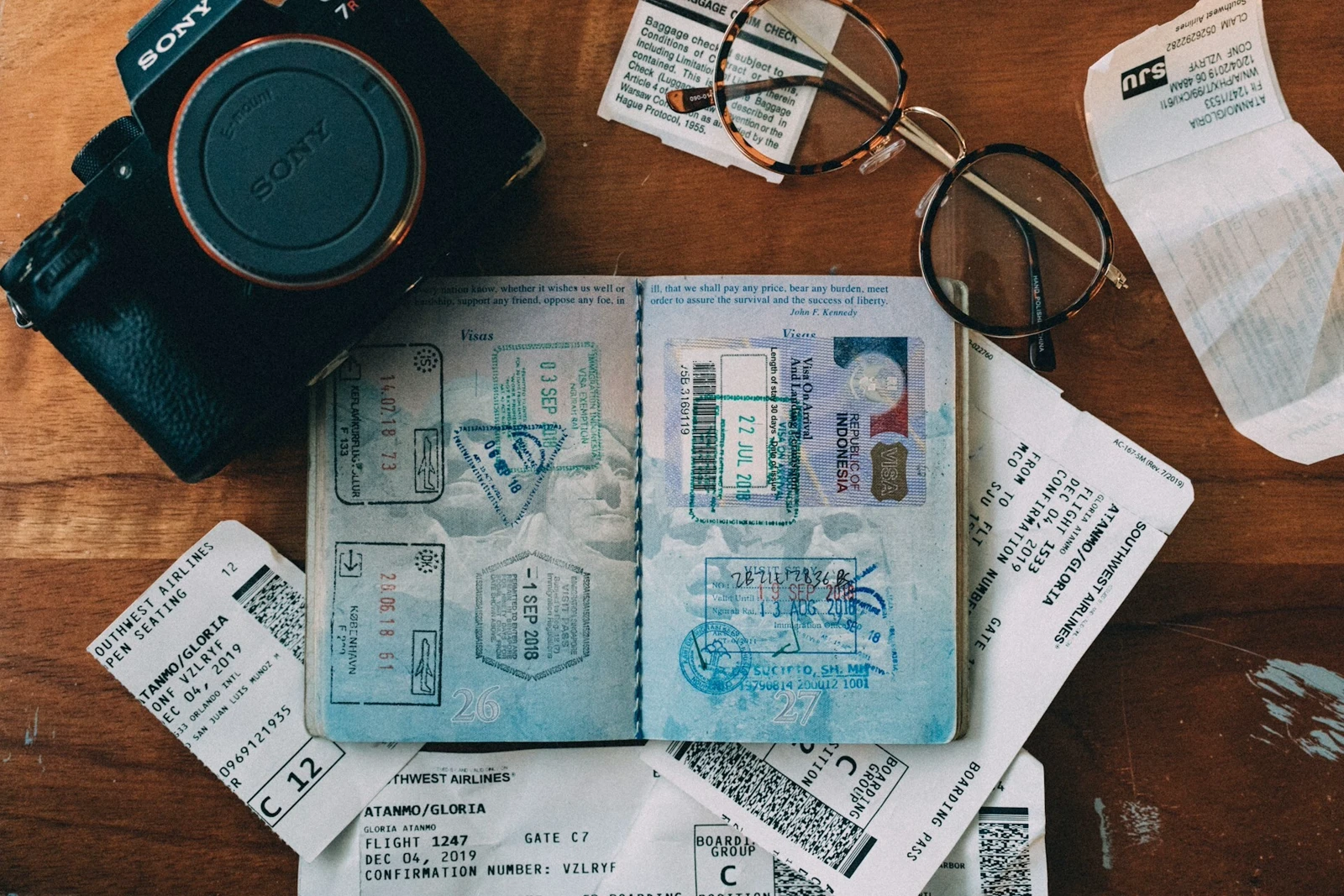
Many internationally mobile taxpayers assume that a passport stamp or flight itinerary is enough to settle a tax residency day count. In practice, how to prove physical presence for tax residency is usually a question of corroboration: can several records created at the time tell the same story about where you were?
To prove physical presence for tax residency, keep a contemporaneous day-by-day travel record backed by independent evidence such as official entry/exit records, used boarding passes, in-person card transactions, accommodation records, phone or GPS data, and work-location records. No single document proves every day in every jurisdiction.
One record may establish a border crossing. Another may establish where you spent the night. Together, they can turn a disputed day into a well-supported fact.
Physical Presence for Tax Residency vs the IRS Physical Presence Test
“Physical presence” can mean different things in tax rules.
In this article, proof of physical presence means evidence showing where you were on particular days when a country or state uses your location to determine tax residency or allocate workdays.
This is different from the IRS Physical Presence Test used for the Foreign Earned Income Exclusion. That test generally asks whether a qualifying taxpayer was physically present in foreign countries for at least 330 full days during a 12-month period.
It is also different from the US Substantial Presence Test, which uses days spent physically present in the United States to determine whether certain non-US citizens are treated as US tax residents.
The practical question here is narrower: if a tax authority questions your day count, what records can show where you actually were? That may require evidence such as border records, used boarding passes, accommodation records, card transactions, phone location data, work records and a contemporaneous travel log.
Proof of Physical presence is not the same as proof of tax residency
Evidence of physical presence shows where you were on particular days. A Tax Residency Certificate (TRC), by contrast, may confirm that a tax authority treats you as resident for a particular period, but it does not necessarily establish where you were on each individual day if your day count is questioned.
This article focuses on proving those individual days.
What Proves Your Days for Tax Residency?
To prove individual days for tax residency, use a travel log backed by independent records showing where you were. Useful evidence can include official entry and exit records, completed travel records, in-person transactions, accommodation records, phone or GPS data, work records and other dated location evidence.
Your evidence has to establish the fact required by the particular residency rule. That distinction matters because countries and states do not necessarily count days in the same way.
For the UK Statutory Residence Test, an individual is generally treated as spending a day in the UK when they are there at the end of the day, subject to specific exceptions and deeming rules. By contrast, the US federal substantial presence test generally treats an individual as present in the United States on a day when they are physically present at any time during that day, again subject to exceptions.
◾ HMRC Statutory Residence Test guidance
◾ IRS Substantial Presence Test
Your evidence must be precise enough to answer the jurisdiction’s actual question. A document showing that you flew on Tuesday may not by itself establish where you were at midnight on Tuesday.
The Records That Matter, From Strongest to Supporting Evidence
There is no statutory worldwide ranking of residency evidence. A useful practical rule is to start with records created independently of you, then use other sources to fill the gaps.
Border/passport record
◾ What it can establish: Entry or exit at a particular border
◾ Main weakness: Does not prove every day between crossings
Used boarding pass
◾ What it can establish: Actual journey on a date
◾ Main weakness: Timing may not establish the whole day
Card/bank transaction
◾ What it can establish: A financial activity in a location
◾ Main weakness: Card may be used online or by another person
Hotel/accommodation record
◾ What it can establish: Accommodation available for specific dates
◾ Main weakness: Booking does not always prove occupancy
Phone/GPS data
◾ What it can establish: Device location or usage pattern
◾ Main weakness: Device location is not automatically person location
Calendar
◾ What it can establish: Your contemporaneous account of the day
◾ Main weakness: Self-created
Work records
◾ What it can establish: Work activity or workplace access
◾ Main weakness: May prove work rather than overnight location
Travel log
◾ What it can establish: Continuous day-by-day narrative
◾ Main weakness: Strongest when corroborated by other records
Transit / toll / access records
◾ What it can establish: Movement or presence at a specific location and time.
◾ Main weakness: May identify a vehicle, card or account rather than the person.
Passport and border records
Start with government-generated entry and exit information when it exists.
Passport stamps can establish that you crossed a particular border on a particular date. They are less useful for proving what happened during a long period between the entry and exit, and increasingly they are not available at all.
Since 10 April 2026, the EU’s Entry/Exit System has been fully operational for covered short-stay non-EU nationals crossing participating European external borders. The system records the date and place of entry and exit digitally rather than relying on routine passport stamping.
That makes official border data particularly useful, but do not mistake a border record for a complete tax residency calendar. It tells you when you crossed a border. Other evidence may still be needed to establish the days between crossings.
Boarding passes and transport records
Keep the used boarding pass, train ticket or other completed travel record where possible.
A flight booking primarily proves that you intended to travel. Plans change. A boarding pass is stronger because it is connected with the journey itself, although even then a cancellation, missed flight or major delay may affect the day-count analysis.
Keep departure and arrival times as well as dates. If your residency test turns on where you were at midnight, the actual timing can matter more than the date printed at the top of an itinerary.
Bank and card transactions
Bank and credit-card records are valuable because they create a dated trail without being produced specifically for the tax dispute.
HMRC expressly refers to credit-card and bank statements showing the pattern and place of day-by-day expenditure when considering evidence relating to a home. New York’s published residency audit guidelines similarly list credit-card statements, receipts, bank statements and ATM records among the records auditors may request.
However, a transaction proves a transaction, not necessarily your physical presence.
A restaurant payment made with your card in Madrid is quite different from an online subscription charged to the same card while you are in London. An additional cardholder can create another complication.
Treat transactions as corroboration, not automatic proof.
Accommodation and hotel receipts
Hotel folios, short-term rental records and other accommodation documents can help establish where you were staying.
They become more persuasive when check-in and checkout dates match travel records and local spending. A hotel invoice standing alone proves that accommodation was booked or charged; it does not necessarily prove that you personally slept there every night.
Longer-term accommodation evidence can also matter where the residency test looks beyond days and considers the existence or use of a home.
Phone and GPS data
Phone data can provide an unusually detailed location trail.
HMRC includes mobile-phone usage and bills among evidence that can indicate presence in a country. New York’s audit guidelines identify telephone records for New York and non-New York residences as another potential source.
GPS history can add greater precision, particularly where it was generated automatically at the time rather than reconstructed later. But keep the distinction clear: the data may establish where a device was located. Normally you still want other evidence connecting that device to you on the disputed date.
Also consider retention. Phone providers and apps may not preserve detailed historical data for as long as a tax authority can examine the relevant year. If location data is important to your position, preserve your own copy rather than assuming it will remain available.
Calendars
A calendar is useful because it explains the story the other records are supposed to support.
A calendar maintained throughout the year is much stronger than one reconstructed after an audit letter arrives. New York expressly identifies written and electronic personal diaries and calendars as records commonly considered in residency audits.
The important distinction is that your calendar is still your record. Use it as an index to objective evidence rather than expecting “London” typed into a calendar entry to settle the question by itself.
Work records
For internationally mobile employees, work records can fill substantial gaps.
Useful evidence can include timesheets, office-access logs, expense reports, employment records and detailed work diaries. HMRC specifically recommends keeping records of where work was performed, days on which more than three hours were worked, hours worked and the nature of the activity where the working tests under the SRT are relevant.
New York’s audit guidance also lists office security or swipe-card records, business diaries, corporate card records, employment contracts and expense vouchers.
◾ Do Nonresidents Pay NYC Tax? How to Track and Prove New York Workdays
A travel log
A good travel log is the spine of the evidence file.
For every date, record the country and, where state or provincial residency matters, the relevant state or region. Record travel movements and any fact relevant to the particular test, such as where you were at midnight or where you performed work.
Then connect that day to supporting evidence.
The purpose is to create a contemporaneous index showing how border records, boarding passes, transactions, accommodation and other records fit together.
Practical Scenario: When Several Records Prove One Disputed Day
A CEO of a European company divides their time between London and Lisbon. Their calendar says they left the UK on a particular evening, and their original airline itinerary appears to agree.
Two years later, the date became relevant to their UK residence calculation.
Looking only at the itinerary would be a mistake. Their flight was delayed. The used boarding pass and airline record show the revised departure; a card transaction places them at Heathrow late that evening; their mobile data begins roaming in Portugal only after arrival.
Under the UK SRT, presence at the end of the day can determine whether that date is a UK day, subject to the specific exceptions and deeming rules.
The lesson is not that phone data always beats an itinerary. Actual events beat planned events. The file works because several records explain why the original itinerary no longer reflects what happened.
◾ Are You a UK Tax Resident? Rules, Tests, and Expat Pitfalls
What Happens When Your Sources Disagree?
Contradictions do not automatically mean that your residency position is wrong. They mean the discrepancy needs to be explained.
First ask what each source genuinely proves. A 9am card transaction does not tell you where you spent midnight. A flight confirmation does not prove the flight operated. A phone may roam onto a foreign network near a border. A card-not-present transaction may have nothing to do with your physical location.
Then check the timing. International travel records frequently use different time zones, and a transaction timestamp may be recorded in the merchant’s time zone rather than your own.
Do not quietly rewrite the travel log to make the inconsistency disappear. Preserve the original record, document the correction and attach the evidence explaining it.
If the disputed day determines whether you cross a tax residency threshold, professional review is worth it. At that point the question is no longer merely where you probably were; it is whether the available evidence satisfies the particular jurisdiction’s test.
Common Mistakes That Weaken Proof of Physical Presence
A common mistake is relying on flight bookings rather than completed travel records. A reservation documents a plan. Keep the boarding pass and evidence of actual departure or arrival when available.
Another is assuming passport stamps create a complete calendar. They establish crossings, not necessarily every day between them.
Many taxpayers also rely too heavily on one digital source. Phone location, card transactions and accommodation records all have blind spots. A consistent combination is more useful than any one of them.
Another problem is reconstructing the entire year from memory after receiving an inquiry. Calendars, diaries and work records already appear among the evidence tax authorities use. Build the timeline while travel is occurring.
Finally, do not assume every jurisdiction uses a generic “183-day rule.” The legal test determines which facts need proving. The evidence comes second.
How Long Should You Retain Tax Residency Evidence?
There is no single worldwide retention period.
For US federal tax records generally, the IRS says records supporting a return should normally be retained until the applicable limitation period expires. The ordinary assessment period is generally three years, with a six-year period in certain substantial-underreporting situations and no limitation period for a fraudulent return or when no valid return is filed.
For UK Self Assessment records, GOV.UK says an individual filing on time should generally keep the relevant records for at least 22 months after the end of the tax year. Different requirements can apply in other circumstances, including business records.
Those minimums do not necessarily make good cross-border record-management policy. One residence position may affect several jurisdictions or multiple tax years. A sensible practical approach is therefore to retain the core residency evidence for six to seven years, or longer if the longest relevant jurisdiction requires it. That is a conservative recordkeeping policy, not a universal statutory rule.
Digital sources may disappear sooner. For example, standard EU EES entry and exit records are generally retained for three years, although longer periods apply in some circumstances. Covered travellers also have access rights over their data. If an EES record matters, preserve it while it is still available.
What to Do Next
At the start of each tax year, create one residency evidence file rather than waiting until filing season. Maintain a day-by-day travel record and save the documents that explain changes of location: border information, used boarding passes, accommodation records and anything needed for unusually close or disputed days.
Focus especially on periods near a relevant threshold. Ten thoroughly documented travel days around a residency boundary can matter more than hundreds of routine days that nobody disputes.
For people moving frequently between countries or US states, Flamingo Compliance – Tax Residency & Visa Tracking iOS app keeps this file building as you travel rather than leaving it for a year-end reconstruction. Your Timeline records each day and where you were, and you can attach the boarding passes, accommodation records and other documents that support your stay, so a disputed day already has its evidence beside it.
Frequently Asked Questions
Are passport stamps enough to prove physical presence for tax residency?
Passport stamps can be strong evidence of a border crossing, but they usually do not prove your location on every day between entry and exit. Combine them with travel, transaction, accommodation or other records where individual days matter.
Can bank statements prove where I was?
Bank and card statements can support your location, but a transaction does not automatically prove that you personally were there. In-person purchases and ATM withdrawals are generally more location-specific than online or recurring transactions.
Is a flight booking proof that I left a country?
A booking proves that travel was planned, not necessarily that it occurred. A used boarding pass, actual flight information and records at the destination provide stronger support.
Can GPS data be used as tax residency evidence?
GPS history can be useful corroborating evidence when it was generated contemporaneously and reliably identifies the device's location. Keep other records as well because device location does not, by itself, prove that the owner was physically carrying it.
What should I do if two records contradict each other?
Investigate and document the discrepancy rather than choosing the record that produces the better tax result. Check actual versus scheduled travel, time zones, card-present versus online transactions and whether the device or card could have been used by somebody else.
How many years should I keep my travel records for tax residency?
The legal retention period depends on the jurisdictions involved. For a cross-border taxpayer, retaining the core residency file for six to seven years is a reasonable conservative practice, but local rules may require a longer or shorter period.
Final Take
The core rule is: prove the day count with records created while the days were happening, and make sure those records tell a consistent story. Tax residency rules differ from one jurisdiction to another, but careful contemporaneous recordkeeping makes the factual part of the analysis much easier to defend.
This article is for informational purposes only and does not constitute tax advice. Consult a qualified tax professional for guidance specific to your situation.

17 Sep 2026
How to Track Workdays Across US States for Tax Purposes
Learn how to track workdays across US states, record your physical work location, keep evidence and manage multi-state tax day counts accurately.

13 Aug 2026
UAE Tax Residency: Who Qualifies and What the Rules Really Mean
Learn how UAE tax residency works, who qualifies under the 183-day and 90-day rules, and when you need a Tax Residency Certificate.

16 Jul 2026
Tax Residency Drift: The Risk Family Offices See Too Late
Tax residency drift can create filing and tax exposure before a family office notices. Learn the warning signs, common triggers, and what to review now.

21 May 2026
Are You a UK Tax Resident? Rules, Tests, and Expat Pitfalls
You are a UK tax resident if you spend 183 or more days in the UK during a tax year. But residency can also be triggered by your family ties, a UK home, or full-time UK work — even if you live abroad.

14 May 2026
Tax Residency vs Domicile vs Residence Permit: What’s the Difference?
Many people use the terms tax residency, domicile, and residence permit interchangeably — but legally, they mean very different things. Confusing them can lead to costly filing mistakes, missed treaty benefits, or unexpected tax bills in two countries at once.

06 Apr 2026
Tax Residency After Moving to Canada: A Guide for Americans
Moving from the US to Canada can feel like a fresh start. But when it comes to taxes, the move rarely means a clean break.

26 Feb 2026
America’s New Migration Story
Why More People Left the U.S. Than Entered — and What It Signals

29 Jan 2026
How HNWIs Stay Tax‑Compliant Across Borders in 2026
How HNWIs and globally mobile founders stay tax-compliant across the UK, US, and Europe in 2026 — day-count rules, CRS reporting, and the compliance tools replacing spreadsheets.
17 Jan 2026
Can You Be a Tax Resident in Two Countries? Dual Tax Residency Explained
Yes, you can be a tax resident in two countries at once. Learn how dual tax residency happens, how treaty tie-breaker rules work, and what to check next.

13 Jun 2025
How 'Hotel California' Lyrics Could Be Prophetic About State Taxes
And how to 'check out' and actually leave the Golden State's tax residency if you choose to

05 Jun 2024
10 Best Countries to Retire in 2024
Your Dream Retirement Could Be More Attainable Than You Think


15 May 2024
Read This Before Moving to a Low-Tax State
Can you save on state income tax by moving to another tax residency? Well, it definitely takes some thought and advice.

08 May 2024
What Is Tax Residency? How to Work Out Where You’re Tax Resident
Learn how 183-day rules, homes, family ties, treaties and dual residency affect your taxes.

02 May 2024
Top 10 Countries Offering Passports for Investments in 2024
Find the country with the best tax residency and citizenship by investment program

27 Apr 2024
Australia’s Shocking New Tax Law Change: What You Need to Know
Think You Can Avoid Australian Taxes by Living Abroad? Think Again